
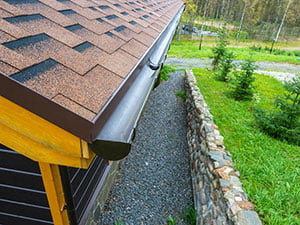
Choosing a gutter system for a commercial building in Carmel, IN starts with how the roof collects water, where downspouts can discharge it, and how the gutters can be inspected and maintained after installation. Gingerich Guttering installs seamless aluminum gutters and has more than 18 years of experience serving homes and businesses. The goal is to match the gutter layout to the building instead of assuming one standard setup fits every property.
Call 765-434-1009 to discuss the roof layout, drainage needs, and proposed gutter system for your building.
Why Choose Seamless Aluminum Gutters?
Seamless gutters are formed in long continuous runs, so they have fewer joints along straight sections than sectional gutters. Fewer joints can reduce the number of connection points that need to be monitored over time, but seamless systems still have seams or connections at corners, outlets, and other details. Installation quality, support, drainage, and maintenance still matter.
Gingerich Guttering also serves commercial gutter customers. Aluminum is commonly used for gutter systems because it can be formed to suit different rooflines and building layouts, but the right configuration still depends on the actual property.
Start With Roof Catchment and Drainage
A gutter run should be planned around the roof area that drains into it, not only the length of the eave. Valleys, adjoining roof sections, additions, and changes in roof geometry can concentrate water into particular locations. Those conditions should be identified before gutter size, outlet locations, and downspout placement are finalized.
Downspout locations also need a practical discharge route. Ask where each downspout will release water and whether that location works with entrances, walkways, parking areas, landscaping, grading, and other site conditions. The goal is to move water away from the building in a way that fits the property rather than simply placing outlets where installation is easiest.
Joints, Supports, and Maintenance Access
Connection points should be easy to identify and inspect. On seamless systems, corners, end caps, outlets, and downspout connections deserve attention because they interrupt the continuous gutter run. Sectional systems add more joints along the gutter itself.
Hangers and other supports should be selected and installed for the actual gutter, roof edge, fascia or attachment surface, and project conditions. Rather than relying on a universal spacing rule, ask the contractor what support approach is proposed for the building and why.
Maintenance access should also be considered during layout. Trees, roof height, equipment, landscaping, and difficult access can affect how gutters are inspected or cleaned later. A system that is difficult to reach may require a different maintenance plan than one that is readily accessible.

Sectional vs. Seamless Aluminum Gutters
Both systems can use aluminum. The main difference is how the gutter runs are assembled and where joints occur.
| Consideration | Sectional Aluminum | Seamless Aluminum |
|---|---|---|
| Joints along straight runs | Sections are joined at intervals along the run. | Long runs are formed continuously, reducing intermediate joints. |
| Fit to the building | Pre-cut sections are assembled to make the required run length. | Runs are formed to the measured length needed for the building. |
| Repair considerations | A problem may be isolated to one section or joint, depending on the condition. | Repair scope depends on where the defect occurs along the continuous run or at a connection. |
| Inspection focus | Joints, outlets, corners, supports, and discharge points. | Corners, outlets, end details, supports, and discharge points. |
If an existing system has repeated defects or no longer fits the drainage needs of the property, a gutter replacement assessment can help define whether repair or a new system is more appropriate.
Ask for a Site-Specific Sizing Rationale
Gutter size, outlet count, and downspout layout should be explained for the actual building. Ask the contractor what roof areas feed each gutter run, where concentrated flow occurs, how the downspouts are distributed, and where the discharge will go. The proposal should make that reasoning understandable without relying on a one-size-fits-all statement.
A gutter contractor in Carmel should also identify assumptions or site conditions that could change the final layout. That gives the property owner a clearer basis for comparing proposals from different contractors.
What to Compare in a Gutter Proposal
Before choosing a proposal, confirm the gutter material and profile, measured runs, downspout locations, discharge routing, support method, connection details, site preparation, removal or disposal work if applicable, and any exclusions. If access or site conditions may affect the work, those assumptions should be stated rather than left until installation day.
Seamless Aluminum Gutters in Carmel, IN
For a commercial property in Carmel, the right gutter system depends on the roof and site rather than a generic layout. Gingerich Guttering can review the building and discuss a seamless aluminum gutter plan based on the drainage path and installation conditions. Contact Gingerich Guttering or call 765-434-1009 to discuss the project.
Frequently Asked Questions
What is the main difference between seamless and sectional aluminum gutters?
Seamless gutters use long continuous runs with fewer intermediate joints. Sectional systems are assembled from shorter pieces joined together along the run.
How is the right gutter size chosen for a commercial building?
The contractor should consider the roof areas feeding each run, concentrated flow points, outlet and downspout locations, discharge routing, and the actual building configuration before recommending a layout.
Do seamless gutters eliminate leaks?
No. They reduce the number of joints along straight runs, but corners, outlets, end details, supports, and other connections still need proper installation and periodic inspection.
What should I compare between gutter installation proposals?
Compare the material, measured runs, downspout layout, discharge routing, supports, connection details, site assumptions, included work, and exclusions so the proposals describe comparable systems.