
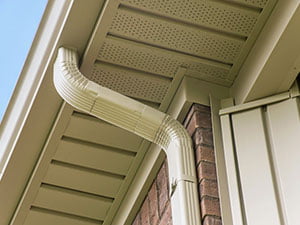
If the gutters on your Carmel, IN commercial building leak in several places, pull away from the fascia, hold water, or overflow after debris is cleared, it may be time to compare repair with replacement. Those symptoms do not automatically require a full replacement, but they do justify a closer look at the runs, supports, downspouts, fascia, and discharge layout. Gingerich Guttering is licensed and insured, family owned and operated, with more than 18 years of experience.
Before requesting a quote, know what you can safely observe and what the contractor should verify. This guide covers repair versus replacement, replacement scope, aluminum and seamless options, and closeout checks. For questions, call 765-434-1009.
How to Tell Repair From Replacement
A single failed seam, loose hanger, or damaged downspout may be repairable. Replacement becomes a stronger consideration when problems repeat across multiple sections or the system no longer carries water reliably.
| What You Notice | Localized Repair May Be Enough When | Broader Replacement May Be Worth Considering When |
|---|---|---|
| Leaks at seams or end caps | One or two isolated joints are loose, open, or need resealing and the surrounding gutter remains serviceable. | Leaks recur at many joints or along several sections, suggesting that repeated spot repairs may not address the overall condition. |
| Joints and gutter sections | A damaged sectional piece can be replaced without disturbing the rest of the run. | Separation, deformation, or deterioration appears across much of the run and a new layout would reduce repeated weak points. |
| Slope toward the downspout | A limited low spot can be corrected by adjusting or replacing affected supports. | Water stands along much of a run or several sections are misaligned and the pitch needs to be reset across the system. |
| Hangers and supports | A few loose or missing supports can be replaced and the attachment surface remains sound. | Gutters pull away in several areas or the existing support layout no longer holds the runs in proper alignment. |
| Downspouts | One damaged or clogged downspout can be repaired, replaced, or cleared. | Overflow continues after cleaning and the contractor determines that the downspout layout or capacity should be changed for the roof area served. |
| Fascia condition | The attachment surface remains solid and only limited repairs are needed around isolated fasteners or sections. | Soft, deteriorated, or damaged fascia affects several attachment points and needs corrective work before new gutters can be secured. |
| Discharge routing | A small routing change or extension can move water to a better discharge point. | Water repeatedly discharges near entrances, walkways, parking areas, or the foundation and the overall downspout layout needs to be reconsidered. |
What Belongs in a Replacement Plan
A replacement should be planned around the building as it exists today. Roof additions or site changes can affect how water should move from the roof to the ground.
- Removal and disposal: Identify whether the old gutters, downspouts, and supports are removed and hauled away.
- Fascia and attachment surface: State how deteriorated material will be handled if the crew finds areas that cannot securely hold the new system.
- Site-specific sizing: The proposed gutter size and downspout layout should reflect the roof area and drainage conditions served by each run rather than one standard configuration for every building.
- Discharge points: The plan should show where downspouts release water and how that routing fits entrances, walkways, parking areas, and foundation drainage.
- Pitch and alignment: Runs should be installed so water moves toward the intended outlets instead of collecting in low spots.
- Exclusions and added work: The proposal should explain what is not included and how unexpected fascia, drainage, or site conditions will be approved and priced.
Ask the contractor to explain why the proposed layout fits your building rather than assuming one size, downspout count, or discharge plan works everywhere.
Materials and Seamless Options
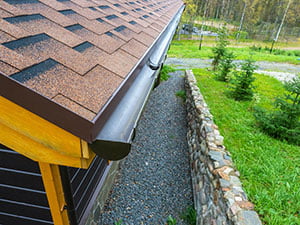
Gingerich Guttering works with aluminum gutter systems, including seamless options. Seamless gutters are formed to fit long runs with fewer field joints than sectional systems. Fewer joints can reduce potential leak points, although corners, outlets, end caps, and other connections still require proper installation.
Sectional aluminum gutters can also be appropriate and may be easier to replace in sections. The right choice depends on the building, layout, and service needs. Compare seamless aluminum gutters in Carmel with Gingerich Guttering’s commercial gutter services.
No gutter system is maintenance free. Debris can still block outlets and downspouts, so cleaning and inspection should follow actual exposure and drainage performance rather than a fixed schedule.
Contractor Work and Owner Observations
Some checks belong to the contractor, while others can be done safely from the ground. Owners do not need to climb ladders to provide useful information.
- Owner observations: During rain, note where water overflows, drips, or runs behind the gutter. From the ground, look for visible sagging, separation, stains below the eave, or pooling near entrances and the foundation.
- Contractor verification: Measure the runs, check alignment and pitch, inspect the attachment surface, evaluate downspout placement, size the proposed system, and determine whether repair or replacement fits the condition.
Owner observations can help identify trouble spots, but the final scope should come from the building-specific assessment.
Closeout Checks After Installation
Before the project is complete, compare the finished work with the written scope:
- Gutter runs are aligned and direct water toward the intended downspouts.
- Joints, corners, end caps, and outlets are sealed and show no obvious leakage.
- Hangers and supports are secure and the gutters remain properly positioned.
- Downspouts are attached securely and discharge at the planned locations.
- Old gutter material and project debris included in the scope have been removed.
Water flow can be observed during rainfall or with a controlled contractor test. Report dripping, overflow, standing water, or discharge in the wrong area so it can be checked against the agreed scope.
Gutter Replacement in Carmel, IN
Gingerich Guttering is licensed and insured, family owned and operated, with more than 18 years of experience. For a Carmel property, determine whether the problem is localized or whether the broader gutter condition supports replacement.
Learn more about the company, contact Gingerich Guttering, or call 765-434-1009 to discuss the building.
Frequently Asked Questions
How do I know if my commercial gutters need to be replaced?
Repeated leaks, widespread misalignment, support failures, overflow after cleaning, or routing problems can justify a replacement assessment. One isolated defect may still be repairable.
Is seamless aluminum better than sectional gutters?
Seamless gutters have fewer field joints, which can reduce potential leak points along long runs. Sectional gutters can still be appropriate and may be easier to replace in sections. The right choice depends on the building and scope.
Can damaged fascia be addressed during gutter replacement?
Yes, when the written scope includes it. If the attachment surface is deteriorated, the contractor should explain what needs to be repaired before the new gutters are secured.
What should I check once the new gutters are installed?
Confirm that the runs are aligned, water reaches the intended downspouts, supports are secure, joints are sealed, and discharge points match the agreed plan.