

Gutter replacement in Wabash, IN should start with a clear diagnosis of what is failing and whether the problem is isolated or spread across the system. Gingerich Guttering installs replacement gutter systems for homes and businesses in Wabash, including aluminum and seamless aluminum gutters.
Before approving replacement, verify the condition of the gutter runs, joints, supports, downspouts, fascia, and discharge routing. A localized defect may be repairable, while widespread sagging, cracking, repeated leaks, or a layout that no longer manages roof runoff can support a broader replacement scope. Call (765) 434-1009 to discuss the property.
A Practical Guide to Gutter Replacement
Replacement is not simply a matter of taking down old gutters and hanging new ones. The new system needs to fit the roof area it serves, move water toward the downspouts, attach to sound supporting surfaces, and discharge water to an appropriate location for the property. The table below helps separate owner observations from conditions a contractor should confirm before the scope is set.
Diagnosis and Scope: What to Verify Before Replacing
| Item | What You May See | Repair or Replace? | Who Confirms |
|---|---|---|---|
| Leaks | Drips or staining at seams, corners, end caps, or outlets | One defined leak may be repairable; repeated leaks across several areas can support replacement | Owner can observe from the ground; contractor identifies the source and extent |
| Joints | Separation, failed sealant, or recurring leaks at connections | An isolated joint may be repairable; repeated joint failure can support a new run or system | Contractor |
| Slope | Water remains in a run instead of moving toward an outlet | Re-hanging may correct a limited slope problem; distorted or damaged runs may require replacement | Owner may notice standing water or overflow; contractor checks alignment and support |
| Supports | Sagging sections or loose and missing hangers | New hangers may correct a sound gutter; bent, cracked, or deformed runs may need replacement | Owner observes from the ground; contractor inspects attachment |
| Downspouts | Overflow near an outlet, detached sections, crushing, or discharge in the wrong place | One damaged downspout can be replaced separately; inadequate outlet or downspout layout may require redesign | Contractor |
| Fascia condition | Staining, separation, or soft areas behind the gutter | Supporting surfaces should be made suitable before new gutters are attached | Owner can note visible staining; contractor evaluates the attachment surface |
| Discharge routing | Water pools near the building, entrances, walks, or other sensitive areas | Routing may be corrected without replacing every gutter, or it can be redesigned as part of replacement | Owner observes where water collects; contractor plans the route |
Signs That Gutter Replacement Is Needed
Common warning signs include sagging or distorted runs, visible cracks, repeated leaks, separation from the building, and frequent overflow that continues after obvious debris or outlet problems are addressed. These observations do not automatically mean every gutter needs replacement. The contractor should determine whether the condition is isolated or affects enough of the system that repeated repair is no longer practical.
If the issue appears limited, Gingerich Guttering’s gutter repair page for Wabash covers that separate repair question.
Choosing the Right Gutter Materials
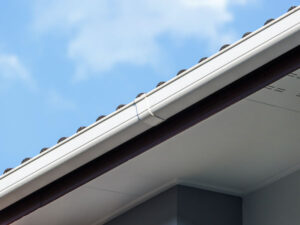
Gingerich Guttering installs aluminum gutters, including seamless aluminum systems. Aluminum is commonly used because it is lightweight and corrosion-resistant. Seamless runs are formed to fit the measured length of each section, which reduces the number of field joints compared with sectional guttering. Corners, end caps, outlets, and downspout connections still require details that should be installed and sealed correctly.
See Gingerich Guttering’s seamless aluminum gutters in Wabash page for the material-specific service.
Importance of Proper Gutter Sizing
Gutter and downspout sizing should come from the property rather than from one standard size for every building. Roof area feeding each run, roof shape, concentrated valleys, run length, outlet locations, and where downspouts can discharge all affect the layout. Ask the contractor to explain the gutter size, outlet count, and downspout arrangement proposed for the roof.
Sizing does not eliminate every overflow risk. Debris, frozen conditions, unusually intense rain, blocked outlets, or discharge problems can still affect performance, which is why the full drainage path matters.
Installation Techniques That Support Performance
New gutters need secure attachment, a workable slope toward outlets, sealed connections, and downspouts routed to a suitable discharge location for the site. The supporting fascia or attachment surface should also be evaluated before the new system is installed. Gingerich Guttering’s gutter installation page for Wabash covers the installation process in more detail.
Closeout Checks Before the Crew Leaves
Before the project is closed, review the work against the written scope. Check that runs are secure, seams and end caps are finished, downspouts are attached, and discharge points match the agreed layout. A controlled water-flow check can help show whether water moves toward the intended outlets and whether visible joints leak at that time. It is a closeout check, not a guarantee that the system will never overflow or develop a future problem.
What Owners Can Safely Observe
From the ground, property owners can watch for overflow, dripping joints, sagging, staining on siding or fascia, and water collecting where the downspouts discharge. Ladder work, fascia evaluation, gutter resizing, and attachment repairs should be left to the contractor or another qualified person.
Maintaining New Gutters for Long-Term Use
New gutters still require maintenance. Cleaning and inspection frequency depends on nearby trees, roof debris, building exposure, gutter guards if present, and how quickly outlets collect material. After storms or when overflow is observed, check the system from the ground and arrange service if a blockage, loose section, or damaged component is suspected. No gutter system should be described as maintenance-free.
Long-Term Benefits of Gutter Replacement
Replacing a worn or poorly laid out gutter system can improve how roof runoff is collected and directed. That can reduce repeated overflow at the eaves and help limit water concentration near siding, fascia, foundations, entrances, and other areas when the complete drainage route is working as intended.
Gutter Replacement Experts
Gingerich Guttering installs replacement gutter systems for homes and businesses in Wabash, IN. A useful replacement proposal should identify what is being removed, the material and profile being installed, gutter and downspout sizing, attachment, discharge routing, and any excluded fascia or site work. Call (765) 434-1009 to discuss a replacement project.
Frequently Asked Questions
How do I know when gutters need to be replaced?
Replacement becomes more likely when sagging, cracking, separation, repeated leaks, or layout problems affect enough of the system that localized repairs no longer address the condition.
Can a repair be enough instead of replacement?
Yes. One leaking joint, loose hanger, damaged downspout, or limited slope problem may be repairable if the surrounding gutter remains serviceable.
How is the right gutter size chosen?
The contractor should consider the roof area feeding each run, roof shape, run length, outlet locations, and downspout routing rather than rely on one standard size for every building.
What should I check when the work is finished?
Confirm the gutters and downspouts are secure, connections are finished, discharge points match the agreed layout, and a closeout flow check shows water moving toward the intended outlets.