
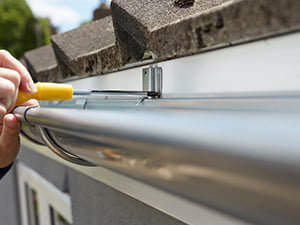
Choosing a gutter installer for a commercial building in Noblesville, IN means checking more than the quoted price. The installation has to move roof water toward the right outlets, stay supported along the run, work with the building’s fascia, and discharge water where it will not create a new problem. Gingerich Guttering installs aluminum and seamless gutters for local homes and businesses and has more than 18 years of experience.
Before work begins, ask how the system was sized, where downspouts will go, what condition the mounting surface is in, and how the completed installation will be checked. Call 765-434-1009 to discuss a Noblesville gutter project.
Experienced Gutter Installer
Experience is useful when it shows up in project planning. A commercial gutter installation can involve long roof edges, multiple drainage areas, entrances, parking, loading zones, fascia conditions, and downspout routes that differ from building to building. Gingerich Guttering provides commercial gutter solutions, including aluminum and seamless gutter systems.
What to Verify Before and During Installation
The table below separates what an owner can observe from the decisions that belong with the contractor. It is a planning guide, not a substitute for site-specific sizing or installation requirements.
| Item | What to Verify | Who Confirms It |
|---|---|---|
| Leaks | Drips, staining, overflow, or water appearing behind the gutter during rain | Owner can observe symptoms safely from the ground; contractor identifies the source |
| Joints and end details | Connections, corners, end caps, and outlets are placed and sealed for the selected system | Contractor |
| Slope | The run is set so water can move toward the intended outlet without avoidable standing water | Contractor sets and verifies it; owner can observe the final flow check |
| Supports | Hangers and fasteners are selected and spaced for the system and mounting conditions | Contractor; owner can notice visible sagging later |
| Downspouts | Number, size, and placement fit the roof areas feeding each gutter run and the available discharge points | Contractor |
| Fascia condition | The mounting area is suitable for fastening and does not have damage that should be addressed first | Contractor inspects; owner can report staining, separation, or visible deterioration |
| Discharge routing | Downspouts terminate at an approved location that fits grading, traffic, drainage infrastructure, and site use | Contractor plans with the property conditions and any applicable site requirements |
Repair or Replacement?
Not every gutter problem requires a full replacement. A localized repair may fit when the issue is limited to a joint, outlet, hanger, short damaged section, or downspout and the rest of the system is still serviceable. Replacement deserves a broader look when failures are repeated across several areas, the system is badly deteriorated, mounting conditions are compromised, or the existing size and layout do not suit the roof and drainage demands.
That decision should come from the extent of the problem rather than from one leak or one loose hanger. For the separate replacement question, see Gingerich Guttering’s gutter replacement information for Noblesville.
Site-Specific Gutter Sizing

Gutter size and downspout layout should be based on the roof areas draining into each run, the roof geometry, outlet locations, and the site’s available discharge routes. A long roof edge or several roof sections feeding one run can place different demands on the system than a smaller, simpler roof. There is no single gutter size or downspout count that fits every commercial building.
Ask the installer to explain the sizing and outlet layout being proposed for your building. Gingerich Guttering’s rain gutters guide for Noblesville covers the separate system-selection question in more detail.
Safe Owner Observations and Contractor Work
Property owners and facility staff can make useful observations from safe ground-level or interior locations. During rain, note overflow, dripping joints, water behind the gutter, sagging runs, wall or fascia staining, and pooling near the building. Those observations can help the contractor focus the inspection.
Ladder work, roof-edge access, fascia repair, resizing, hanger installation, and downspout changes should be handled by the contractor. A visible symptom can show that water is going somewhere it should not, but it does not by itself establish the correct repair or installation scope.
Closeout Checks
Before considering the installation complete, ask how the contractor will verify that the system matches the agreed scope. A useful closeout review can include gutter alignment, secure supports, sealed end details, downspout connections, and a water-flow check where appropriate for the site and system. The purpose is to confirm that water reaches the intended outlets and discharge locations before the crew leaves.
Also ask what routine cleaning and inspection access will be needed later. Maintenance frequency depends on tree cover, roof debris, building height, access, weather exposure, and the gutter system itself, so it should not be reduced to one fixed schedule for every property.
Planning Around Business Operations
Commercial gutter work can affect parking, entrances, loading areas, and normal building access. The proposal should identify where crews and equipment will work, how materials will be staged, and which areas may need temporary restrictions. A realistic schedule should account for weather and site access rather than promise that operations will never be affected.
Gutter Installation in Noblesville, IN
Gingerich Guttering has more than 18 years of experience serving local homes and businesses and provides aluminum, seamless, and commercial gutter services in Noblesville. To discuss a gutter installation, contact Gingerich Guttering or call 765-434-1009.
Frequently Asked Questions
What should I verify before a gutter installation?
Confirm how the system was sized, the proposed slope, support method, downspout layout, fascia condition, and where the water will discharge after leaving the building.
How do I know whether gutter repair or replacement makes more sense?
A repair may fit when the defect is isolated and the rest of the system remains serviceable. Repeated failures, widespread deterioration, mounting damage, or an unsuitable layout can point toward replacement.
What can I safely check myself?
From the ground or inside the building, you can note overflow, dripping joints, sagging, staining, and pooling. Ladder, roof-edge, fascia, and installation work should be left to the contractor.
How is gutter size decided?
It depends on the roof areas feeding each gutter run, roof geometry, outlet locations, and available discharge routes. The installer should explain how those conditions shaped the proposed system.