
Gutter installation in Fort Wayne, IN should do more than collect roof runoff. A complete system needs to move water through properly sized gutters and downspouts, stay securely attached, discharge in a suitable location, and remain accessible for future cleaning and inspection. The useful question is not simply whether new gutters are needed, but whether the existing system can be cleaned or repaired, or whether replacement is the more practical next step.
Gingerich Guttering provides residential gutter installation in Fort Wayne. Call (765) 434-1009 to discuss the property and the gutter scope.
How Gutter Installation Protects Foundations

A gutter system helps move roof runoff away from the home instead of letting it fall directly beside the foundation. That can reduce repeated saturation at the perimeter when the downspouts and discharge routing are planned for the property. The final routing still needs to account for grading, walkways, landscaping, and low areas rather than assuming every downspout should terminate the same way.
Gutter Installation Helps Manage Water Near the Home
When roof runoff is not controlled, water can collect near basements, crawl spaces, exterior walls, and other vulnerable areas. Gutters and downspouts create a defined drainage path, but they do not by themselves correct grading, underground drainage, or other site conditions. Those issues should be evaluated separately when they affect where water goes after leaving the gutter system.
Protecting Fascia and Landscaping
The fascia supports the gutter attachment along the roof edge, so its condition matters before new gutters are installed. Soft, deteriorated, or damaged fascia may need separate repair before it can provide suitable support. Landscaping also affects discharge planning because concentrated runoff can wash mulch, erode soil, or create wet areas if the outlet is poorly located.
Choosing the Right Gutter System
Roof area, roof geometry, the number and location of downspouts, drainage path, building details, and expected runoff all affect gutter sizing and layout. A contractor should size the system for the property instead of relying on one standard configuration for every home.
For related service context, see Gingerich Guttering’s gutter installation information and its overview of a gutter system.
What a Complete Installation Scope Should Cover
A written scope should make the important drainage and attachment details clear before installation begins.
Joints and seams. Where joints are present, the scope should identify how they will be assembled and sealed. Fewer joints can reduce the number of connection points, but the performance of the finished system still depends on installation quality and maintenance.
Supports and hangers. Hanger type, spacing, fastening, fascia condition, and the load on the gutter all affect support. The appropriate layout should follow the actual system and property rather than a universal spacing rule.
Downspouts. The number, size, and placement of downspouts should match the roof sections they serve and the available discharge routes. Placement should also consider entrances, walkways, landscaping, and low areas.
Fascia condition. The installer should identify visible fascia conditions that affect attachment and clarify whether fascia repair is included or needs separate work before installation.
Discharge routing. The plan should show where water will go after it leaves each downspout. Extensions, splash blocks, underground drainage, grading changes, or other measures should be included only when they are appropriate and part of the agreed scope.
Maintenance access. Trees, roof geometry, gutter guards when present, and the location of downspouts can affect future cleaning and inspection. The installed system should remain practical to access for normal maintenance.
Cleaning, Localized Repair, or Full Replacement
Not every gutter problem requires a new system. Cleaning may be enough when debris is restricting flow and the gutters remain securely attached and otherwise serviceable. Localized repair may fit a limited issue such as one loose section, leaking joint, damaged outlet, or short sagging run when the surrounding system remains usable.
Replacement becomes more reasonable when problems are repeated across multiple sections, the existing layout cannot manage the property’s drainage needs, attachment conditions are broadly deteriorated, or continued repairs would leave the owner with an unreliable system. Age by itself should not be the only reason to replace gutters.
What to Confirm at Closeout
Before the job is treated as complete, the owner should be able to confirm that the agreed runs and downspouts are installed, attachment points are secure, visible seams and end conditions are complete, discharge points match the plan, and water has a clear path toward the downspouts. A flow check can help reveal obvious drainage problems, but it should be used as a practical closeout observation rather than as a guarantee of performance in every storm.
Long Term Benefits of Professional Installation
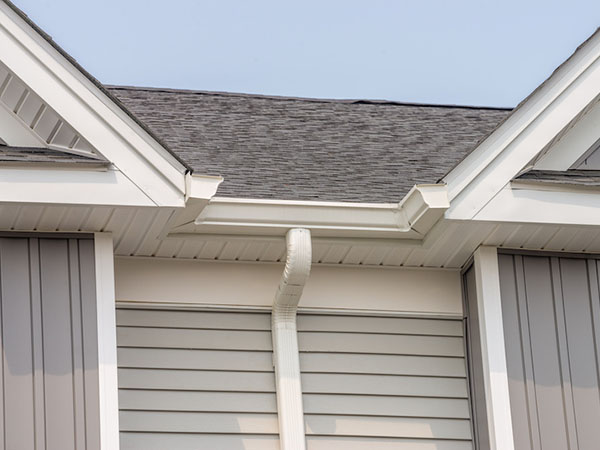
A properly planned gutter system gives roof runoff a controlled route away from the home and makes future maintenance easier to organize. The value comes from matching the gutter size, downspout layout, attachment, fascia condition, and discharge routing to the property rather than from assuming one product or configuration works everywhere.
Gingerich Guttering also explains why gutter installation quality matters. For gutter installation in Fort Wayne, call (765) 434-1009 to discuss the next step.
Frequently Asked Questions
What gutter profile works best for a home in Fort Wayne?
The right profile depends on the roof, runoff volume, downspout layout, building details, and the drainage route available on the property. The system should be sized for the actual home rather than selected from one universal rule.
How long does gutter installation take?
Project timing depends on the home’s size, access, existing gutter removal, fascia conditions, layout complexity, and the work included in the scope. A contractor can give a project-specific schedule after evaluating the property.
What is the difference between seamless and sectional gutters?
Seamless gutters are formed in longer continuous runs with fewer field joints, while sectional gutters are assembled from shorter pieces. Either system still depends on proper sizing, attachment, slope, downspouts, and maintenance.
How do I know whether my gutters need cleaning, repair, or replacement?
Look at the condition of the entire system. Debris-related flow problems may call for cleaning, isolated defects may support repair, and repeated failures or an unsuitable drainage layout can justify replacement.